The pattern is clear: condition matters more the more a card is worth. A lightly played $10 card sells for about the same as a near-mint one, while a lightly played $200 card loses about 17% and a heavily played one about half its value. Cheap cards have few sales per condition, so their numbers swing more; treat them as a rough guide.
Guide
One Piece card condition guide: NM, LP, MP, HP and DMG
A card’s condition decides how much of its market price you can actually get. Here is how the five condition grades used by TCGplayer and most stores differ, and what played and graded ONE PIECE Card Game cards really sell for, measured on 6,023 One Piece card versions.
Quick reference
What a played copy sells for as a share of the near-mint market price (median), by how much a near-mint copy is worth. Measured on October 31, 2026 from market prices per condition.
| Condition | $5–25 | $25–100 | $100+ |
|---|---|---|---|
| NM Near Mint | 100% | 100% | 100% |
| LP Lightly Played | 100% | 98% | 83% |
| MP Moderately Played | 91% | 84% | 66% |
| HP Heavily Played | 75% | 74% | 48% |
| DMG Damaged | 70% | 66% | 50% |
The five condition grades
Near Mint (NM)
Looks fresh from the pack.
- Sharp corners, no rounding
- Clean edges: no whitening on the front or the back
- No scratches, scuffs or print damage you can see at arm’s length
- Flat card, no bends, dents or creases
- Tiny factory flaws (a print line, slight off-centering) are allowed
Near Mint is the price every BountyScope price refers to: the market price on a card page is for a near-mint, ungraded copy.
Lightly Played (LP)
Small signs of handling, still looks great in a binder. On a $100+ card it typically sells for about 83% of the near-mint price, on a $25–100 card about 98%.
- Light whitening on a few edges or corners
- A few faint surface scratches, mostly visible under light
- No bends, creases or water damage
Moderately Played (MP)
Clearly used, still fine to play in a sleeve. On a $100+ card it typically sells for about 66% of the near-mint price, on a $25–100 card about 84%.
- Whitening along several edges, softened corners
- Visible scratches or scuffing, especially on foil
- Minor dings or a small dent, but no crease through the card
Heavily Played (HP)
Lots of wear, structurally intact. On a $100+ card it typically sells for about 48% of the near-mint price, on a $25–100 card about 74%.
- Heavy whitening all around, rounded corners
- Deep scratches, scuffs or clouding on the surface
- Dents, light creases or a slight bend
Damaged (DMG)
Major damage. On a $100+ card it typically sells for about 50% of the near-mint price, on a $25–100 card about 66%.
- Hard creases, folds, tears or holes
- Water damage, ink, writing or stickers
- Peeling, warping or a strong bend
How to check a card’s condition
- Use good light. Tilt the card under a lamp: scratches and scuffs on foil only show at an angle.
- Check the back too. Edge and corner whitening is often easiest to spot on the back.
- Look at all four corners for rounding, and run along the edges for chips and nicks.
- Hold it flat at eye level to spot bends, dents and creases.
- Grade by the worst flaw. One crease makes a card Heavily Played or Damaged, however clean the rest is.
Foil cards (rares and up, alternate arts, SP and manga cards) show scratches and print lines more easily than commons, so check them closely. Sleeve valuable cards as soon as you pull them.
Graded cards: what a PSA 10 is worth
A graded card is sealed in a case (a “slab”) with a grade from 1 to 10. The table shows what graded copies sell for as a multiple of the same card’s raw near-mint price (median, cards worth $5 or more, 1,347 cards with graded sales). Updated daily.
| Grade | All |
|---|---|
| PSA 10 1,300 | 3.0× |
| PSA 9 909 | 1.16× |
| PSA 8 293 | 0.96× |
| BGS 10 733 | 3.6× |
| BGS 9.5 804 | 1.47× |
| CGC 10 684 | 2.5× |
| TAG 10 381 | 3.2× |
A PSA 10 typically sells for 3.0× the raw price, a PSA 9 for only 1.16×. That gap is the whole case for grading: the premium is in the 10, and a 9 often barely covers the cost of grading. The multiple is biggest on $5–25 cards (5.6× for a PSA 10) and smallest on $100+ cards (1.44×), but in dollars a 10 adds the most to expensive cards.
Grading only pays off when the card is genuinely near mint, with good centering on top, because the grader checks corners, edges, surface and centering under magnification. Every card page lists the graded prices for that exact card, so compare them with the raw price and the grading fee before you send anything in.
Put it to use
- Check what a card is worth: near-mint, graded and recent eBay prices.
- Trade calculator: compare both sides of a trade at market prices.
- Rarity guide: which version of a card you have.
- All tools
Condition questions
What does NM mean on a One Piece card?
NM is Near Mint: a card that looks fresh from the pack, with sharp corners, clean edges and no visible scratches. Market prices for One Piece cards, including on BountyScope, are near-mint prices unless they say otherwise.
How much is a lightly played One Piece card worth?
For cards worth $100 or more, lightly played copies sold for about 83% of the near-mint price in our October 2026 measurement. For cheaper cards the difference is small: lightly played $25–100 cards sold for about 98% of near mint.
Does condition matter for cheap cards?
Not much. Below about $25, played copies sell close to the near-mint price because the card itself is cheap and shipping and fees make up most of the cost. Condition starts to matter on valuable cards, where buyers check it closely.
How much more is a PSA 10 One Piece card worth?
The typical PSA 10 sells for 3.0× the raw near-mint price of the same card, a PSA 9 for 1.16×. The multiple is highest on cheaper cards and lower on expensive ones, where raw copies already cost a lot.
Should I grade my One Piece cards?
Only when a high grade is likely and the graded price minus grading fees and shipping beats selling raw. Check the card’s page: it lists PSA, BGS, CGC and TAG prices next to the raw price. Most commons and regular rares are not worth grading.

Check your own pulls
Scan your cards with BountyScope: point your phone at a card and see which version it is and what it’s worth.

More guides
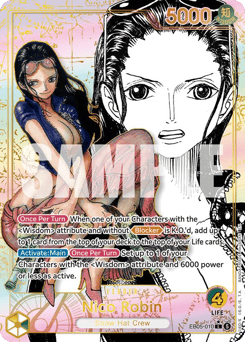 Set guide · EB05 Heroines Edition Vol.2: chase cards, card list and pricesEvery version in the new Extra Booster, the cards worth pulling, the Nico Robin leader and what the set is worth, with prices updated daily.
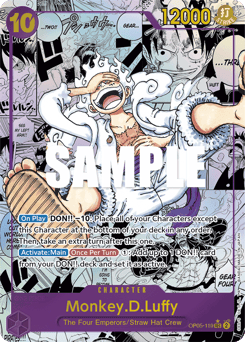 Guide · One Piece card rarities and versions, explainedWhat C, UC, R, SR, SEC, L and P mean, how alt arts, manga rares, SP cards and event stamps differ, and what each kind of card is worth.